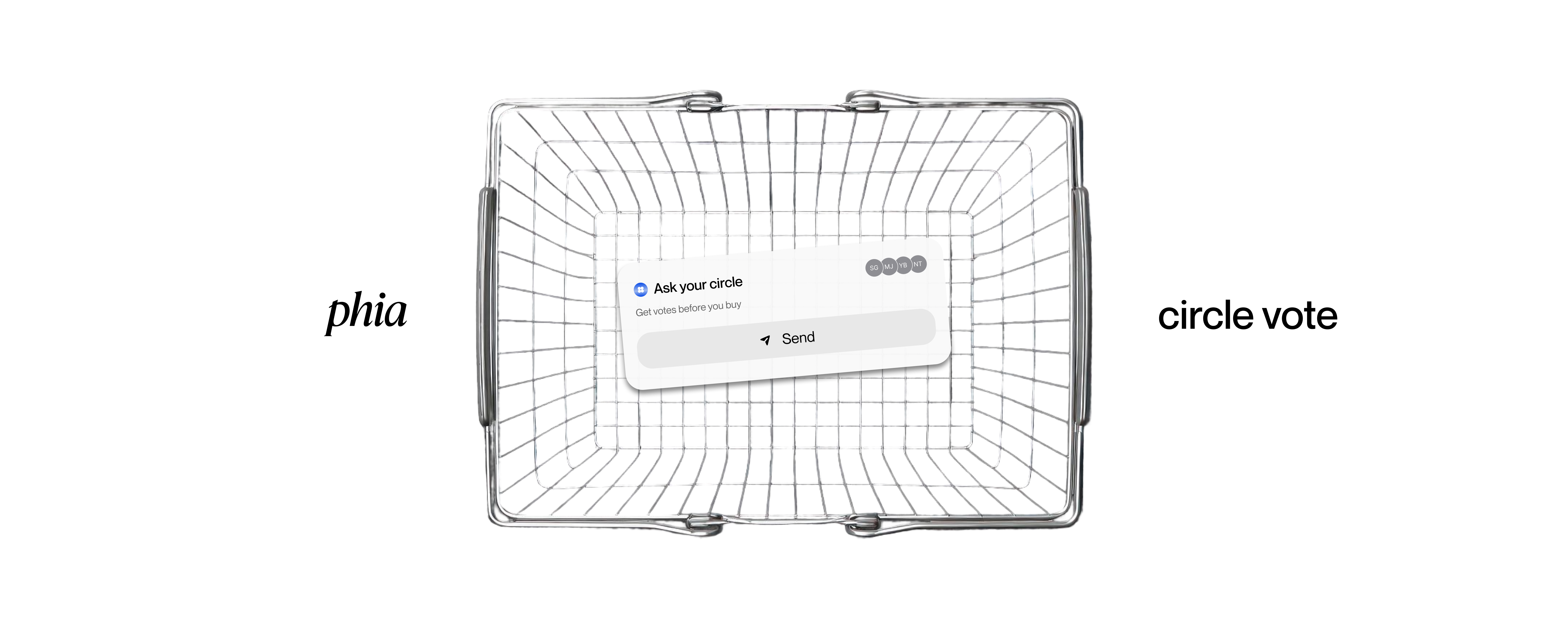
Reimagining Decision Confidence in Phia's Shopping Experience
Timeline
April 2026
Role
Product Designer
With
Phia Team
Design Meetup
Disciplines
Product Design
Interaction Design
Visual Design
Prototyping
Stakeholder Presentation
Shoppers waste hours deciding whether to buy. This is the trust-based voting system I researched and designed in 24 hours that transforms solo shopping into collaborative decision-making.
The Problem
What would it take to never regret an online purchase again?
Flew from SF → NY to pitch my solution answering this question in front of the Phia team.
24 hours. Selected from 50+ submissions. 1 challenge: design an end-to-end feature that solves one high-friction moment in online shopping.
Context
85% of online shoppers regret an impulse purchase according to Investopedia.
Shopping is currently a broken process. Drowning in analysis-paralysis. Second-guessing decisions.
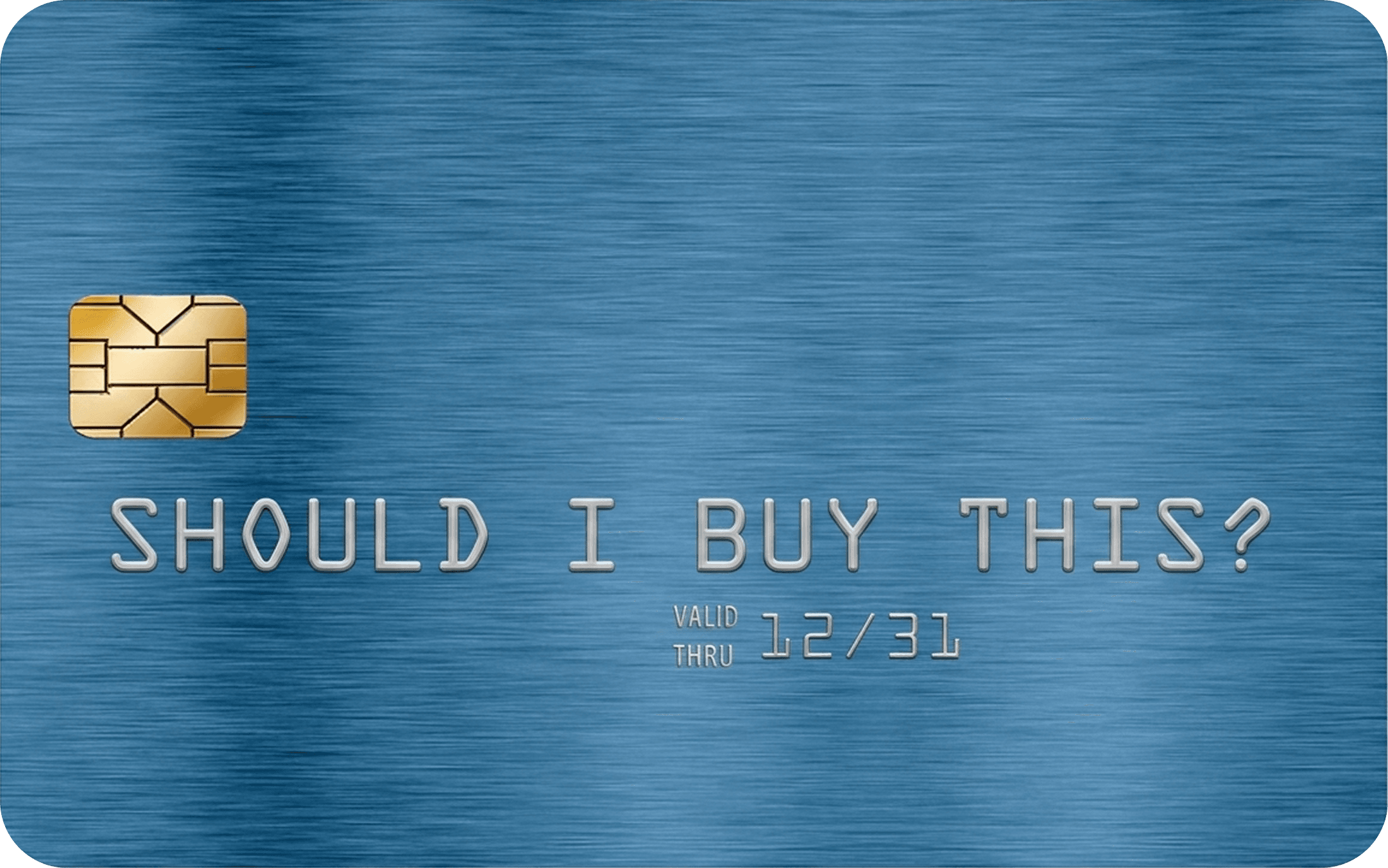
People already ask others before buying. But it's done across several screenshots, texts, and fragmented apps.
There's no tool that does this seamlessly. So I built it.
Introducing Circle Vote
Before you buy something, you ask your inner circle whether you should buy it.
One tap. Trusted people. Real-time votes. Opinions from humans who actually care if you regret it.
User Understanding
Meet Carmen, the “Overthinker”
28, works in tech sales, shops online 3-4x/week
 Has 50+ items saved in the carts across multiple sites
- Screenshots products to friends and hates waiting an unknown amount of time for them to respond






Meet Emma, the “Go-to Advisor”
29, works in fashion, known for good taste in friend group
- Gets 6-10 “Do you think I should buy this?” texts per week
- Loves to help but feels overwhelmed with context-switching between messages in different places
PHASE ONE: The Extension
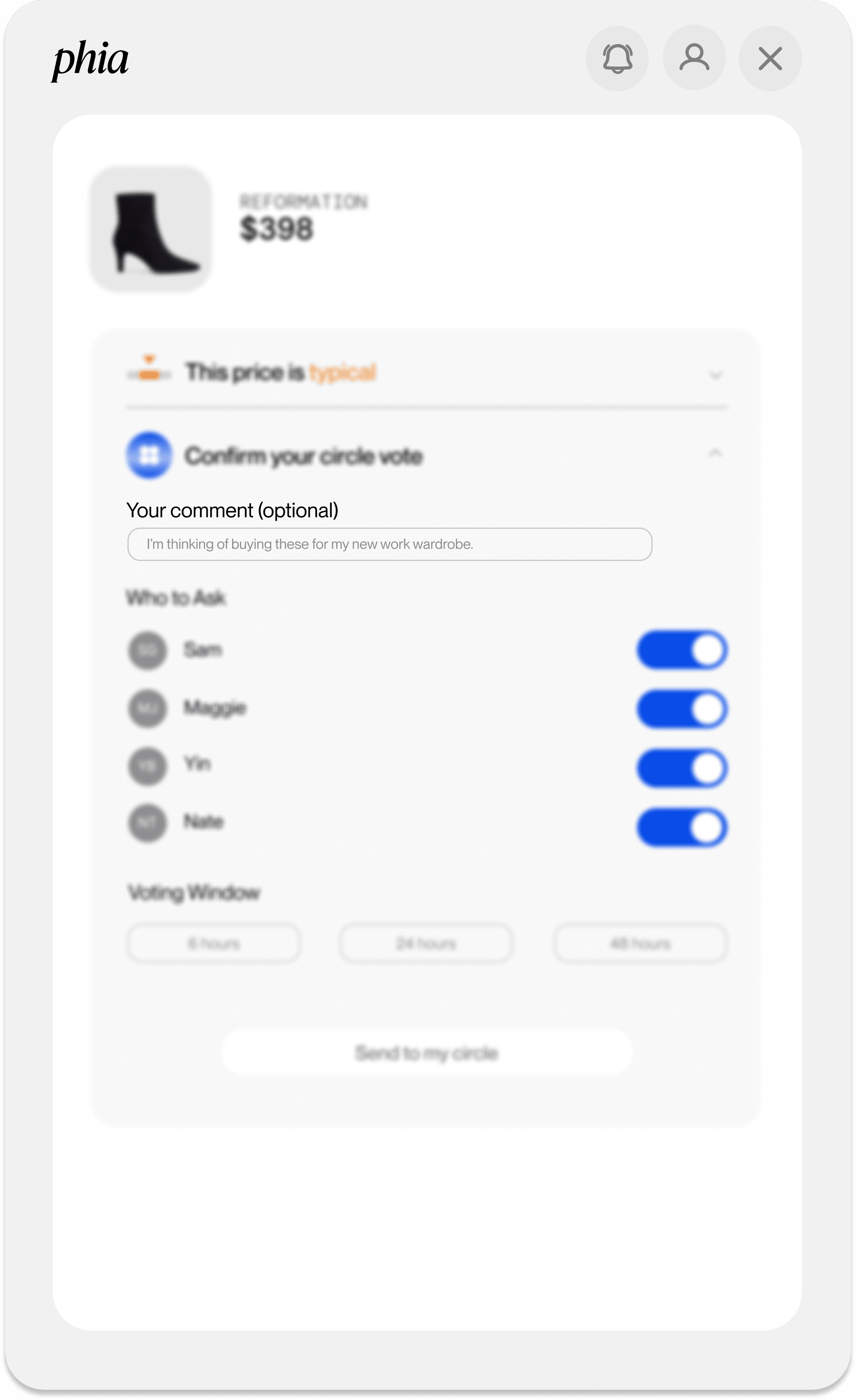
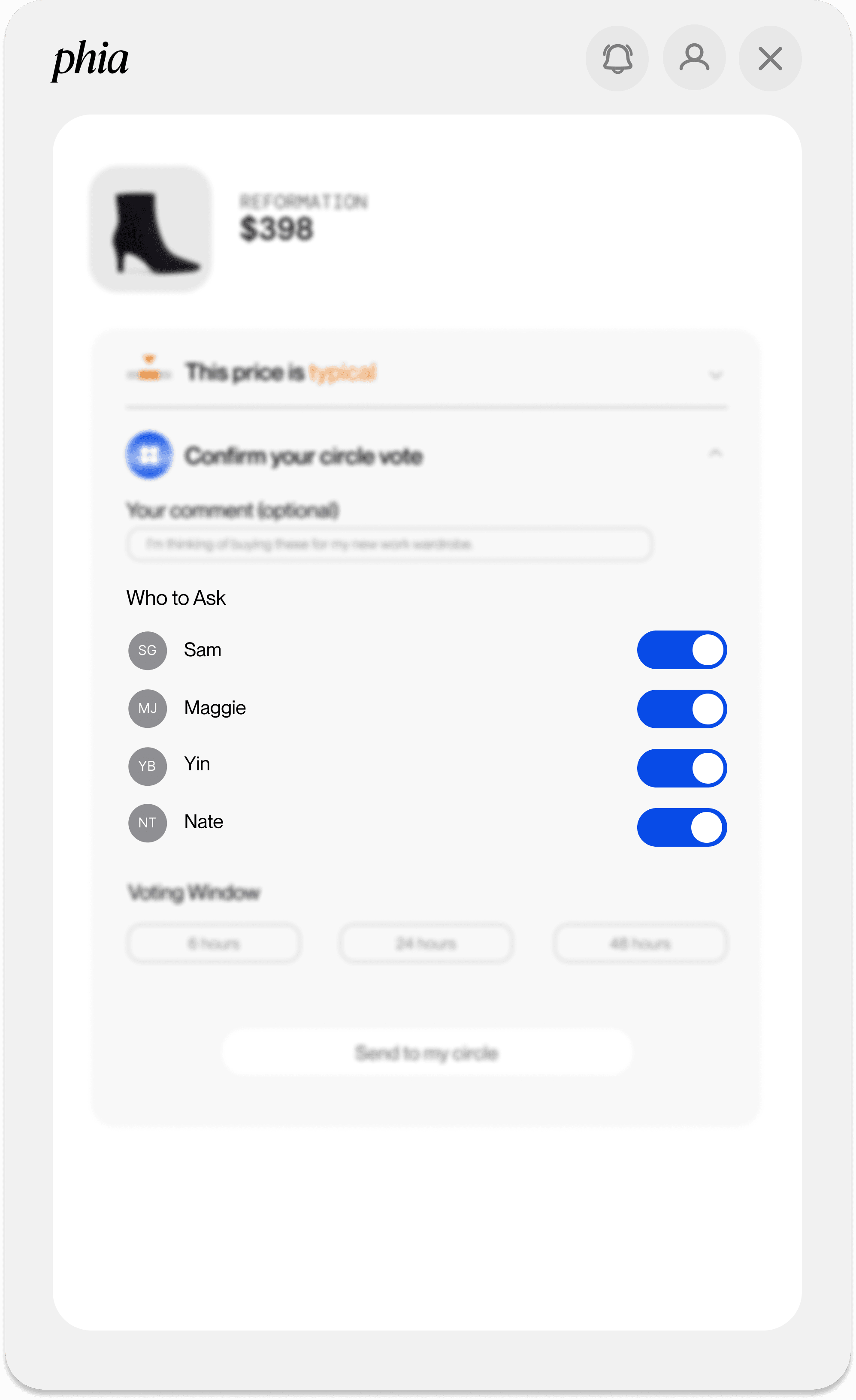
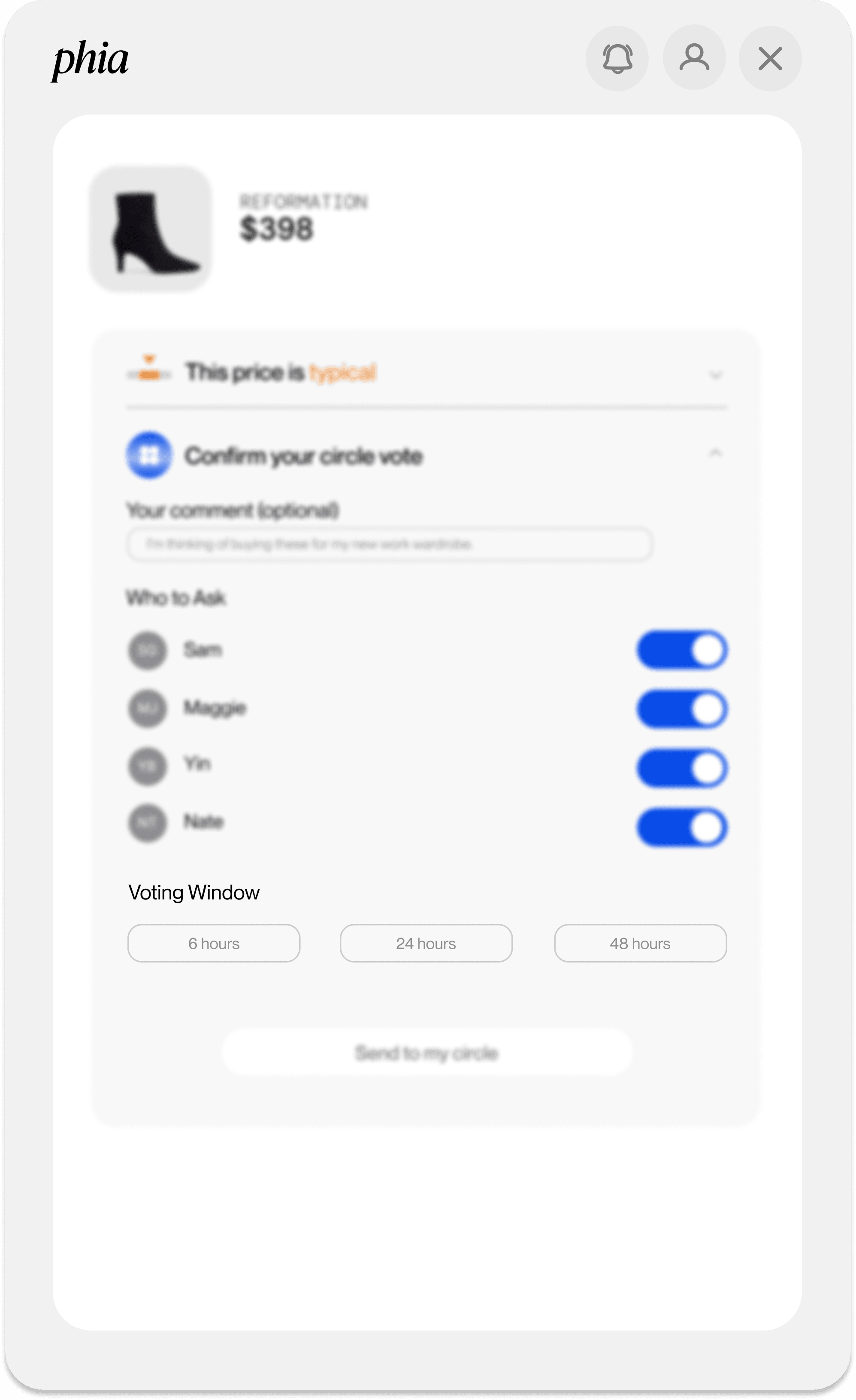
I started with tackling the core design challenge: How to make asking for help effortless?
Minimizing taps was the main goal. Every extra step in a moment of impulse is a potential exit ramp. I had to make it feel like a reflex, not an unfamiliar feature.
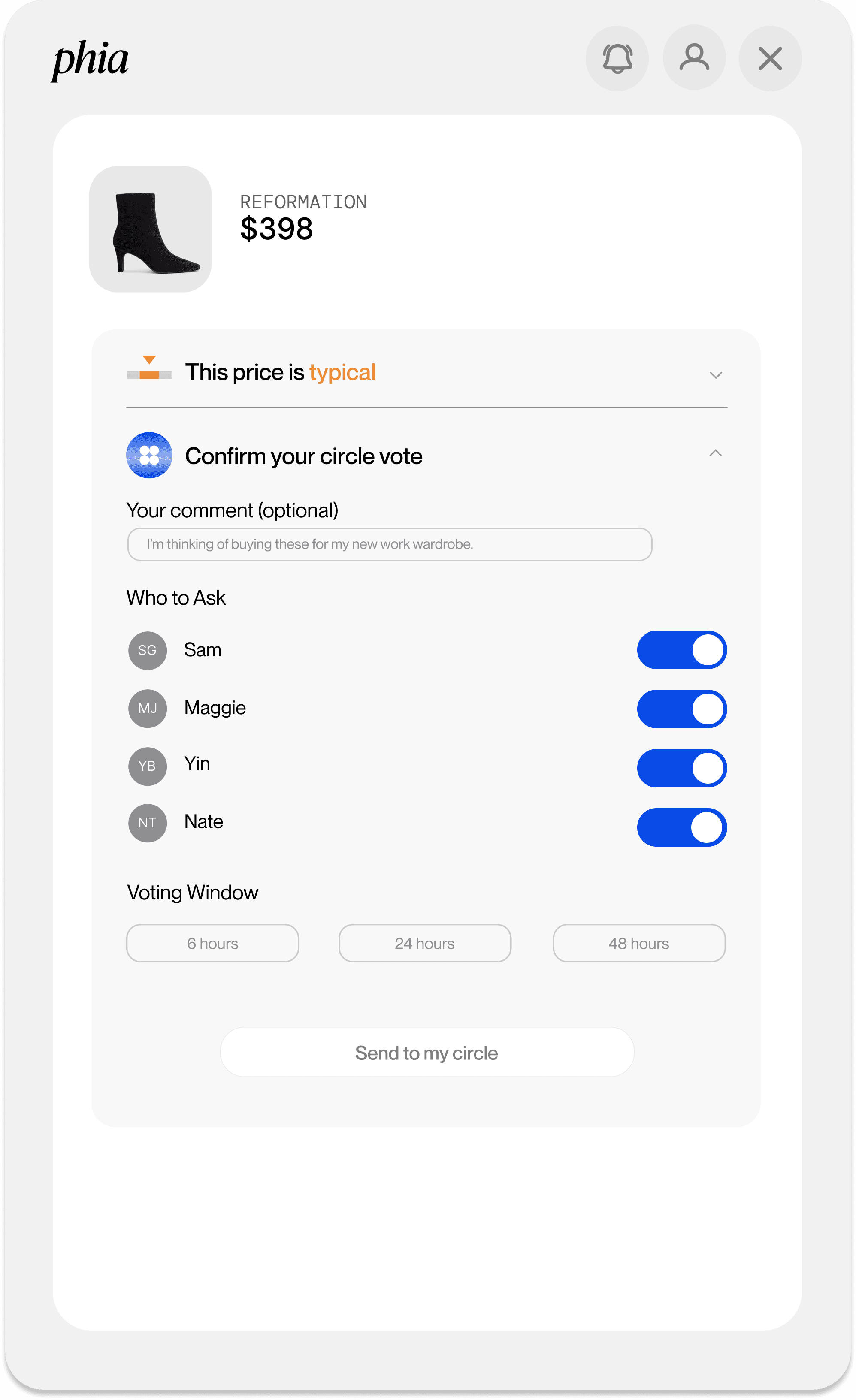
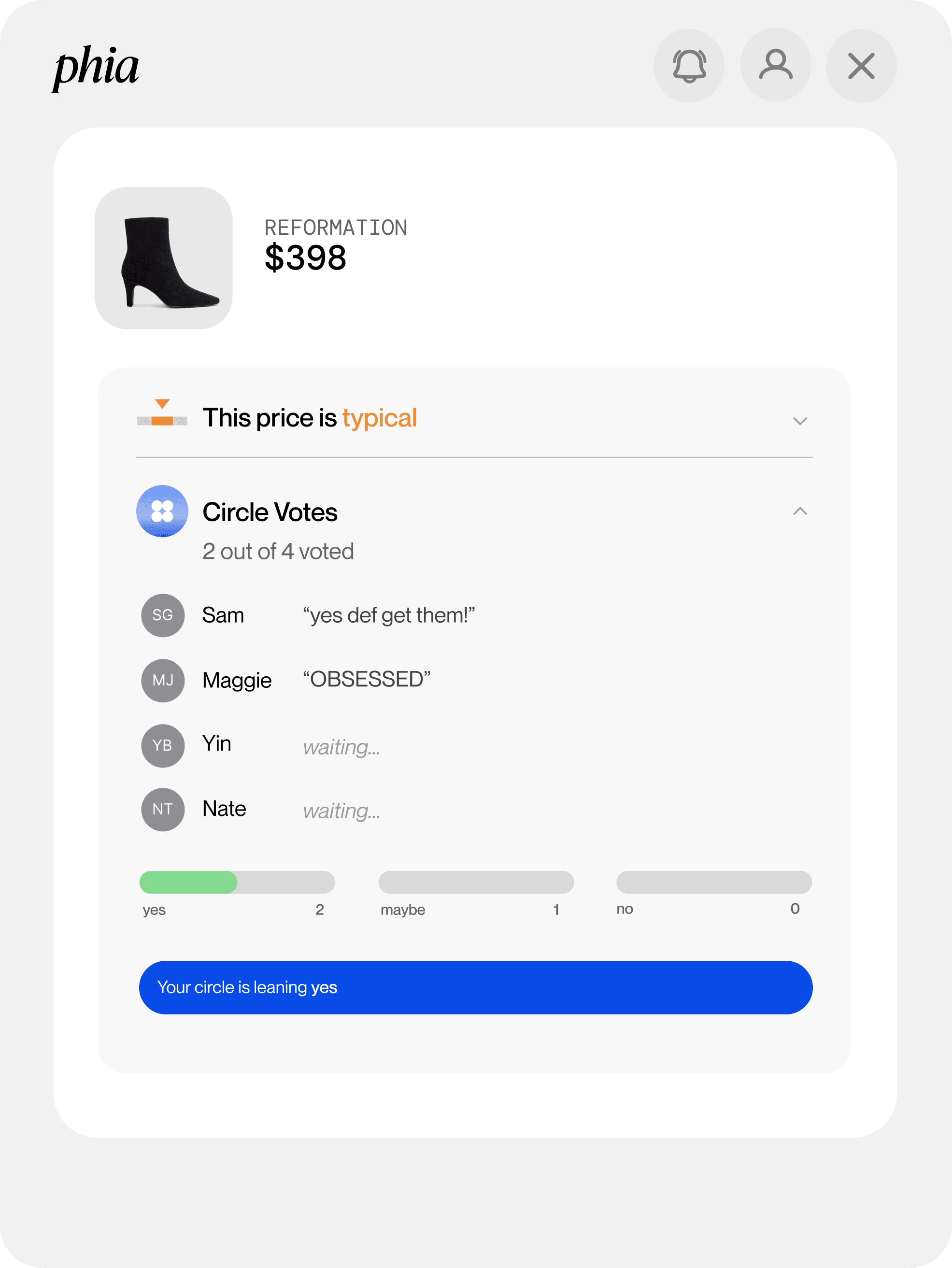
Once the vote is live, the sender watches their circle respond in real time.
Comments roll in alongside a live consensus bar showing where the circle is leaning.
PHASE TWO: The App
During the feedback session, the Phia team asked how would this translate to the app.
This was not just a resize challenge. This opened the context wider, to the device where the circle usually lives. And begs the question of how do people respond to a vote.
The Built-In Growth Loop
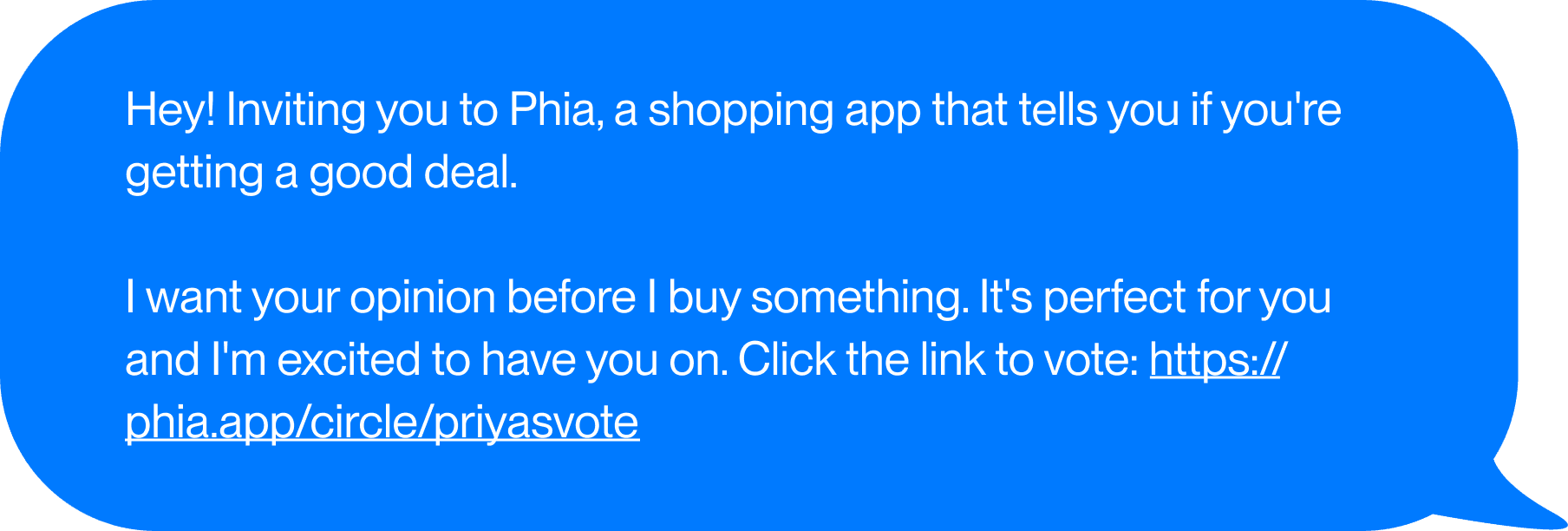
Every time a user sends a vote request, they're potentially funneling people into the Phia ecosystem who may have never heard of it.
If someone in your circle doesn't have Phia, they get a text. The same way you'd hear from a friend. The vote only means something if the voter is invested. Filter for people who actually care and get a real user out of it.

Beyond the Competition
Given more time, I'd conduct deeper research and continue building out the product.
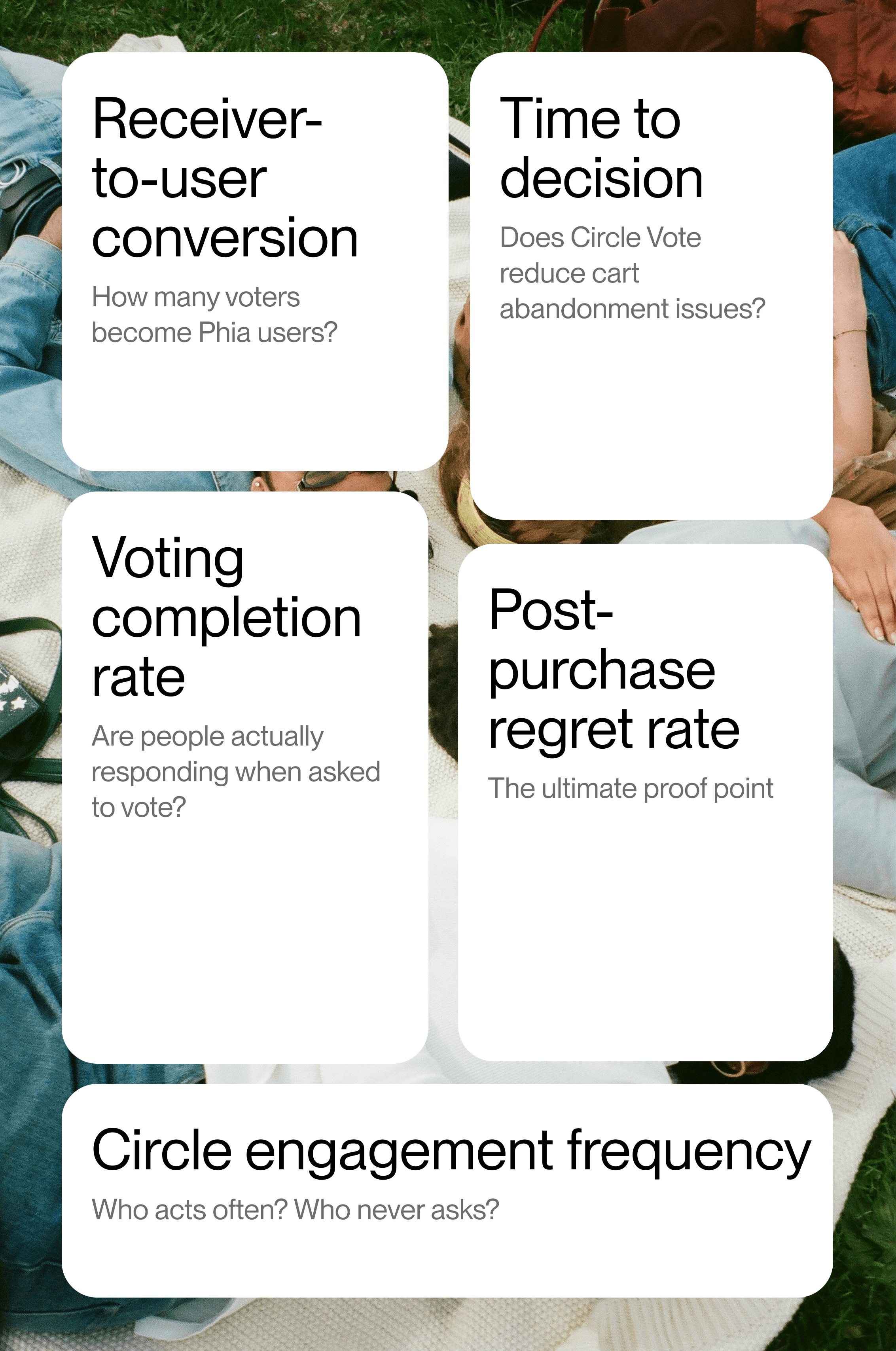
I identified five metrics to measure whether Circle Vote actually works.
The two flows I'd prioritize next: the circle creation process and a personal votes dashboard where users can track active votes and see how their circle responded.
Reflections
Prioritizing Progress Over Perfection
I had to be scrappy and move quickly. With only 24 hours to build a feature that reduced friction in shopping, I started with a problem I knew from my own experience. Whenever I buy clothes online, I usually text friends for their opinions before checking out. That became my focus, and instead of getting stuck thinking through every edge case, I designed the simplest version first. A browser extension where people could send items to friends and collect votes. Having something tangible to show during feedback helped the conversation stay grounded in the product and led people to ask how the experience would work on mobile and across different screen sizes.
Taking the Unconventional Route
I flew from San Francisco to New York for this experience without knowing anyone there. Most of the designers came from the New York and Boston area, and I was the only participant from the West Coast. The chance to spend a weekend building alongside talented designers felt too interesting to pass up. I left with new connections, a feature I'm genuinely proud of, and more confidence in saying yes to opportunities that don't follow the expected path.